


Why Installation Matters More Than the Material: The Truth About Metal Roofing
25 January 2026
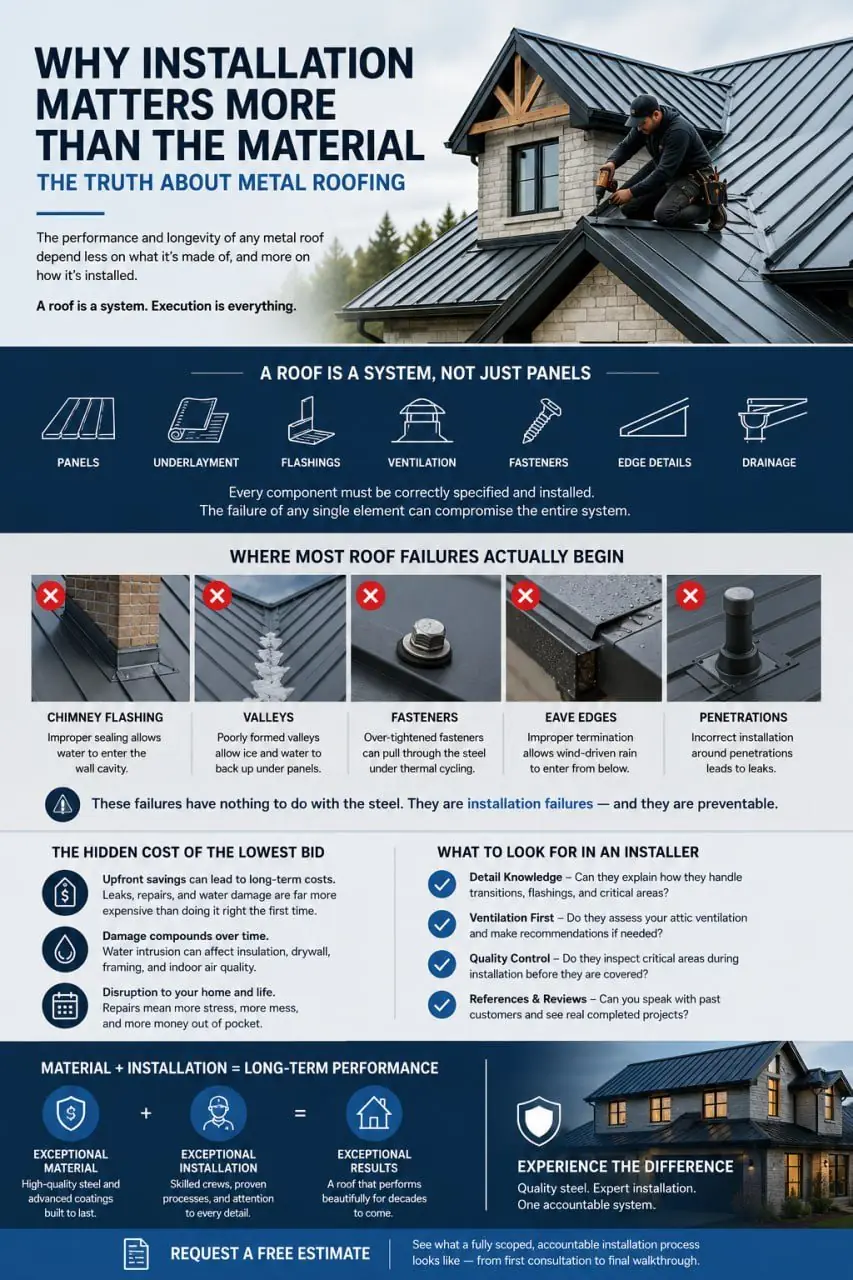
There is a conversation that happens constantly in the roofing industry, and it almost always focuses on the wrong thing. Homeowners compare steel grades. They ask about panel profiles and coating weights. They read about zinc-magnesium versus galvanized, about 26-gauge versus 24-gauge, about standing seam versus metal tile. All of this is relevant. None of it is the most important factor.
The most important factor in the performance and longevity of any metal roof is how it is installed. Not what it is made of.
This is a claim that surprises people. It sounds like something a contractor says to deflect attention from their material quality. But it is actually the opposite — it is something that only a contractor confident in both their materials and their craft can afford to say honestly.
A Roof Is a System, Not a Product
When you purchase a vehicle, the engine matters. But so does the fuel system, the transmission, the cooling system, and the assembly that holds it all together. A premium engine in a poorly assembled vehicle is not a premium vehicle. The same logic applies to roofing.
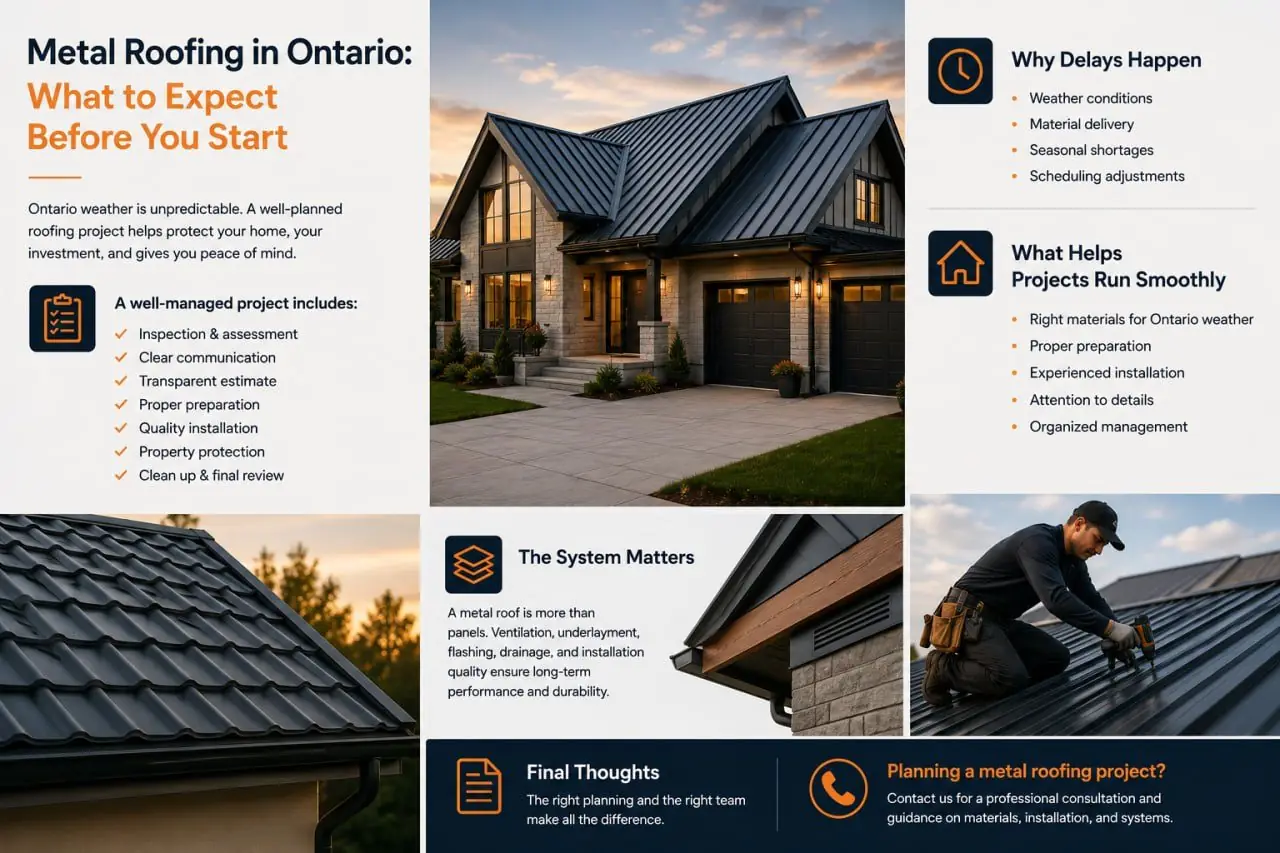
A metal roofing system consists of panels, yes — but also underlayment, flashings, ventilation components, fasteners, edge details, drainage management, and the structural preparation of the deck below. Every one of these elements must be correctly specified and correctly installed. The failure of any single component can compromise the entire system — regardless of how good the panels themselves are.
Where Most Roof Failures Actually Begin
Industry data on roofing failures consistently points to the same locations: transitions, penetrations, and edges. Not the flat field of the roof — the details.
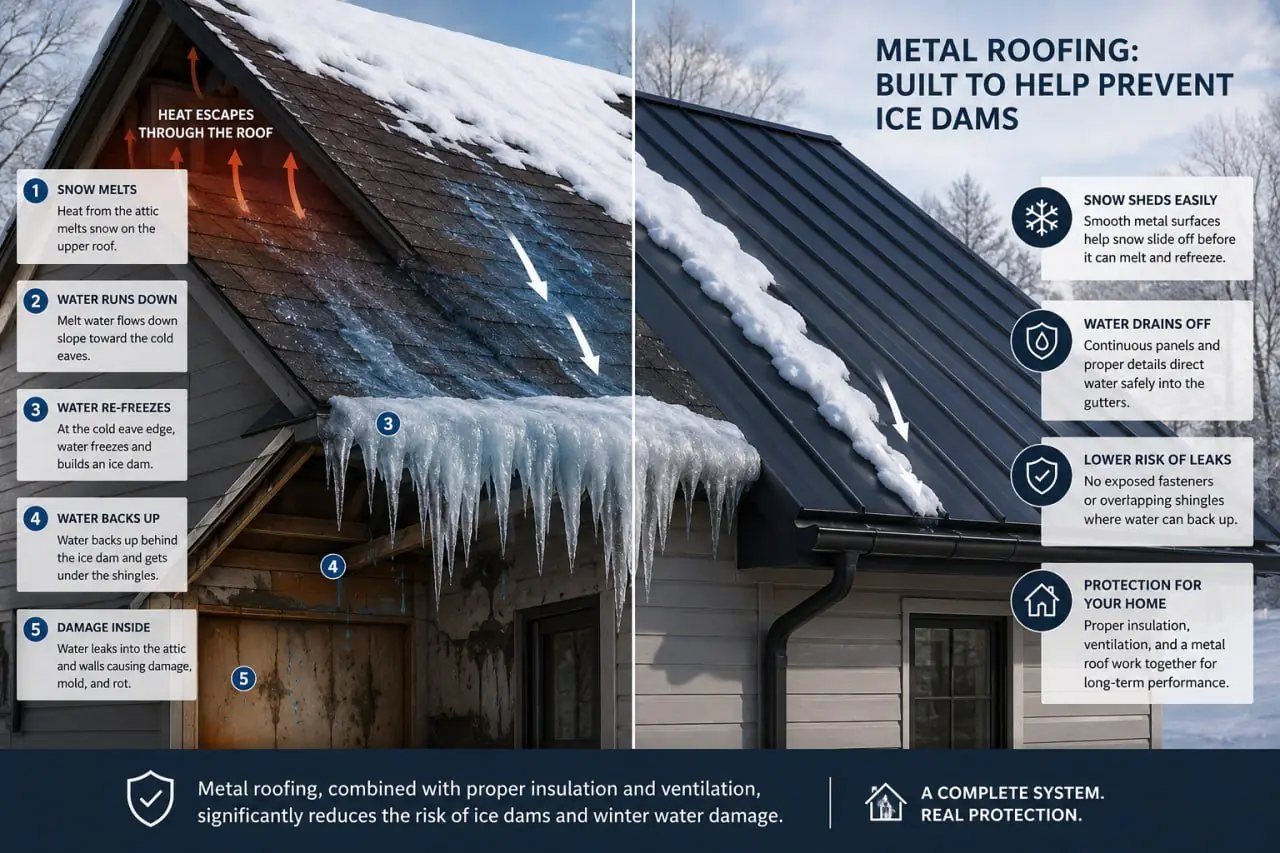
A chimney flashing that is not properly sealed allows water to migrate into the wall cavity. A valley that is not correctly formed allows ice to back up and force water under the panels. A fastener that is over-tightened pulls through the steel under thermal cycling. An eave edge that is not properly terminated allows wind-driven rain to enter from below.
None of these failures have anything to do with the grade of steel in the panels. They are installation failures — and they are entirely preventable by a crew that knows what they are doing and takes the time to do it correctly.
The Hidden Cost of Choosing the Lowest Bid
When homeowners receive multiple roofing quotes, the temptation to choose the lowest price is understandable. Roofing is expensive. The difference between bids can easily be several thousand dollars. That gap feels significant when you are looking at it as an upfront number.
What that calculation misses is the cost of installation failures. A leak that develops three years after installation — in a location that is now difficult to access, behind finished interior walls, or under materials that have settled and shifted — can cost significantly more to repair than the savings from the cheaper original quote. And that is before accounting for the damage to insulation, drywall, or framing that water intrusion causes over time.
A properly installed metal roof does not leak. It does not fail at flashings. It does not allow ice dams to force water inside. These are not aspirational outcomes — they are the result of doing the work correctly from the beginning.
What to Look for in an Installation
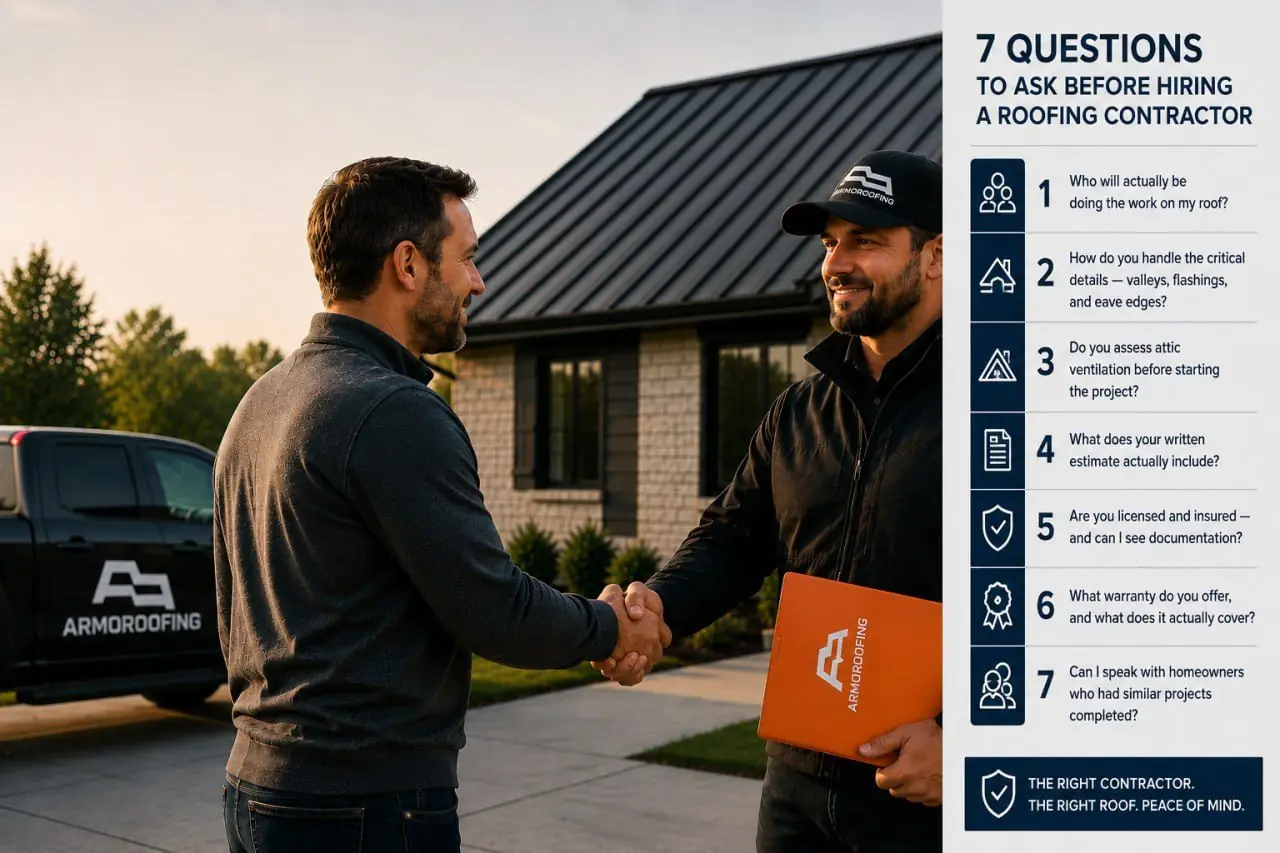
If you are evaluating roofing contractors in Ontario, here are the questions that will tell you more about installation quality than any specification sheet.
Ask how they handle the transition between the roof and any vertical wall or chimney. A vague answer — or a simple reference to «standard flashing» — is a warning sign. A skilled installer can describe exactly what they do at each critical detail and why.
Ask about ventilation. Does the installer assess your attic ventilation before the project begins? Do they make recommendations if it is insufficient? A contractor who installs panels without considering what is happening underneath them is not thinking about long-term performance.
Ask about the inspection process during installation. Is there a step where critical areas — valleys, eaves, penetrations — are reviewed before they are covered? Or does the crew simply move from one end of the roof to the other and call it done?
Ask for references and, if possible, to see completed projects. Not photos of finished roofs, but actual projects where you can speak with the homeowner. Ask them not just whether the roof looks good, but whether the company communicated well, showed up as scheduled, and left the property clean.
Why Material and Installation Cannot Be Separated
The best outcome in roofing is achieved when exceptional material and exceptional installation come together. Neither compensates for the other. A company that controls its own supply chain — producing its own panels and installing them with its own trained crews — closes the gap between what the material is capable of and what the finished roof actually delivers.
That is the standard that matters. Not the gauge of the steel in isolation, or the installation crew in isolation, but the integrated system — from the steel mill to the finished roof — treated as a single, accountable process.
Because in the end, the roof over your home is not a specification. It is a result. And results come from execution, not just specification.
📄 Request a free estimate and see what a fully scoped, accountable installation process looks like — from first consultation to final walkthrough.
Other articles
Get a free estimate
Leave your contacts and a few words about your project — we will call you back and prepare a clear estimate.